
OTT & media
Are signed URLs enough for a paid video platform
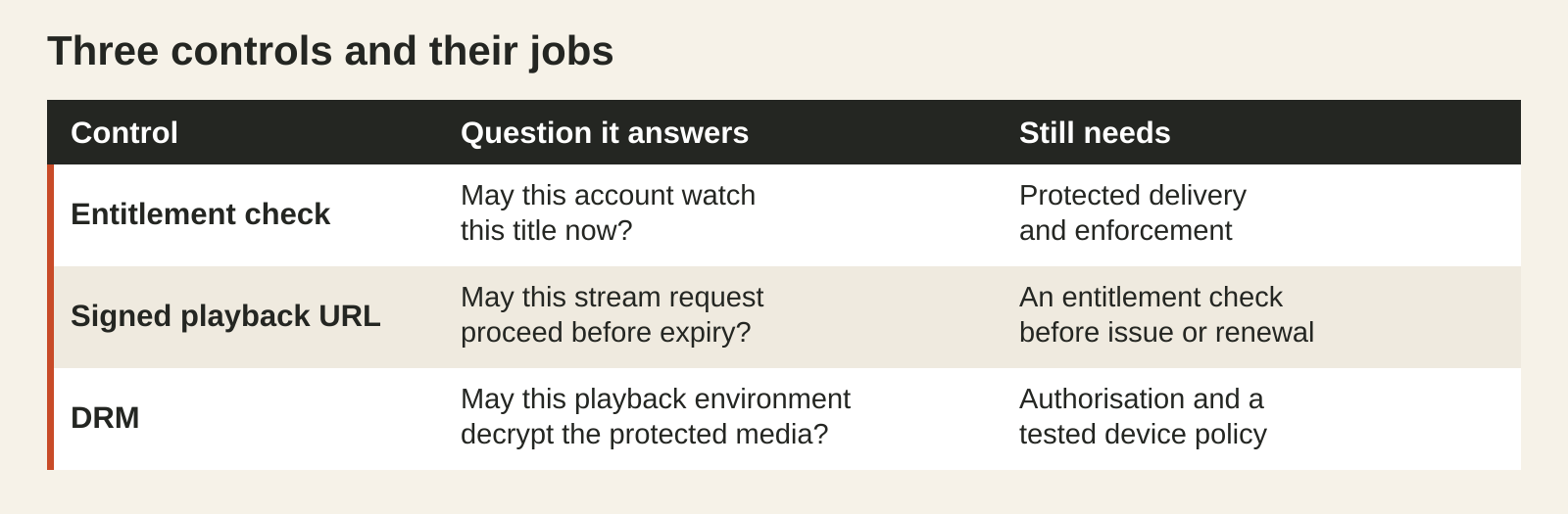
For an Australian publisher selling video access, start with server-side entitlement checks and expiring playback links. Add digital rights management (DRM) when your content agreement requires it or the risk of copying justifies the extra implementation and testing. These controls do different jobs. A supplier should explain which problem each one addresses before you approve the platform scope.
Define who can watch
An entitlement is the rule that says a particular account can watch a particular title now. It might come from an active subscription, a rental window or a one-off purchase. Signing in establishes identity; your application still needs to check access to the requested video.
Define what happens after a refund, failed payment, cancellation or content-rights expiry. Cancellation might leave access running until the paid period ends. Write that policy down, then require the server to enforce it before issuing playback authorisation.
What signed URLs protect
A signed playback URL carries a verifiable permission with an expiry time. It helps keep a protected stream from being accessed through an ordinary public link. The application should issue it only after checking the viewer’s entitlement, with signing credentials kept on the server.
A valid link may still be shared while its permissions allow access. Domain restrictions can add a barrier to embedding, but they do not establish whether someone paid. Check that protected videos have no alternative public playback route. Agree how token expiry and renewal work so legitimate viewers can finish a long programme.
When DRM belongs in scope
DRM encrypts the media and requires a compatible playback environment to obtain a licence. It can add resistance to copying and screen capture, depending on the device, browser and security configuration. It cannot promise that piracy or recording is impossible.
For licensed films or premium programming, get the rights holder’s protection requirements before choosing a provider. For self-owned, lower-risk material, entitlement checks and signed playback may be a proportionate starting point. Make that a deliberate risk decision.
Ask for the supported browser, phone and TV combinations, including casting and any offline viewing you need. DRM support in a product brochure does not establish support for your exact device mix. Include licensing, integration and ongoing service fees in the quote.
Test what happens when access ends
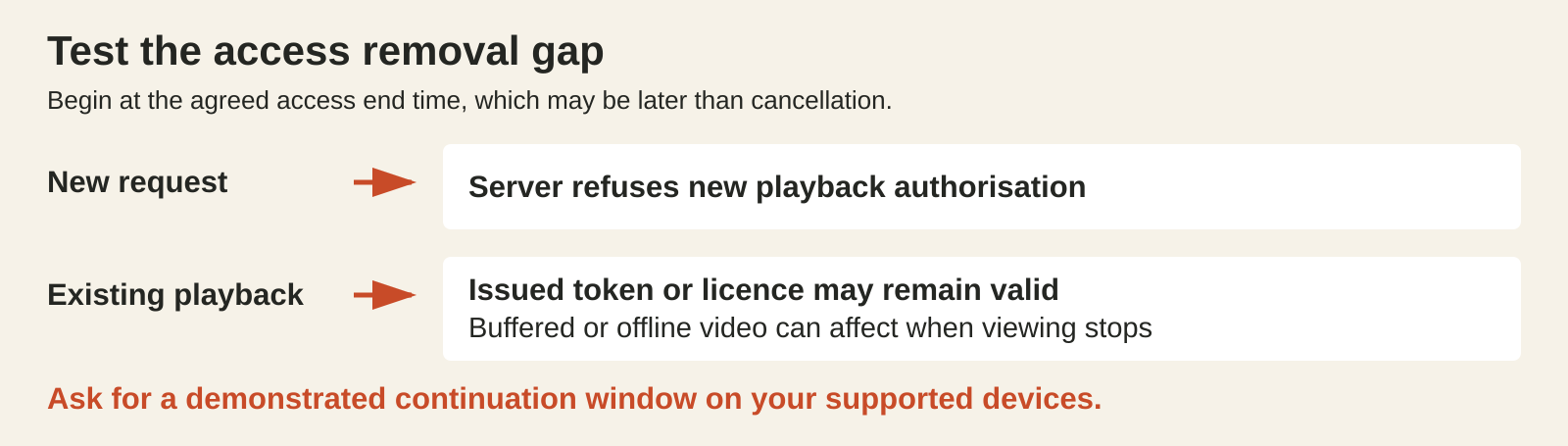
Removing an entitlement should stop new authorisations. It may not immediately stop a session that already has a valid token, DRM licence or buffered video. The supplier needs to show the actual behaviour, including when a viewer refreshes the page or resumes playback.
Use a test account to start a video, end its access under your agreed policy, then try a new playback request and an already-open player. Repeat with offline downloads if offered. Ask the supplier to state the maximum expected continuation window and demonstrate it. “We use DRM” is not an answer to that test.
Put the behaviour in the brief
Before accepting a proposal, record the access rules, supported devices, token and licence lifetimes, and expected behaviour when authorisation services are unavailable. Ask how support staff will diagnose a legitimate customer who cannot watch. If you want limits on simultaneous viewing, specify and test those separately.
These requirements give an OTT streaming platform brief a testable definition of protected playback. You can then compare proposals on what viewers and support staff will actually experience.
Put the thinking to work.
Planning a paid video service? Talk to Tej Studio about your content rights, audience devices and access rules before choosing the protection stack.
Explore OTT streaming platforms Start a conversation