
Software & technology
Website redesign redirects and launch checks
Before approving a redesign that changes page URLs, require a reviewed redirect map, tested permanent redirects and a named person responsible for fixing launch problems. Put these deliverables in the project scope before signing off the new site. For an Australian business, website redesign redirects should be part of the buying brief. Old links may still appear in customer emails, supplier directories, saved bookmarks and printed QR codes. The plan needs to account for where those visitors will land.
Keep useful URLs where you can
Ask the supplier which addresses genuinely need to change. A new visual design does not automatically require a new URL for every service, location or article. Keeping a useful address avoids creating another redirect to maintain.
Agree the proposed address structure before final content entry. If the team changes slugs during launch week, require the redirect map to be updated and retested. Include this check in your approval process.
Ask for a map you can review
Have the team build the old URL list from the existing site, CMS, sitemap, analytics and available server logs. Include linked PDFs and campaign landing pages that may be missing from the navigation.
Request a spreadsheet with the old address, planned action, final destination, reason for the decision and test result. Assign someone in your business to review the destinations for important services and enquiries.
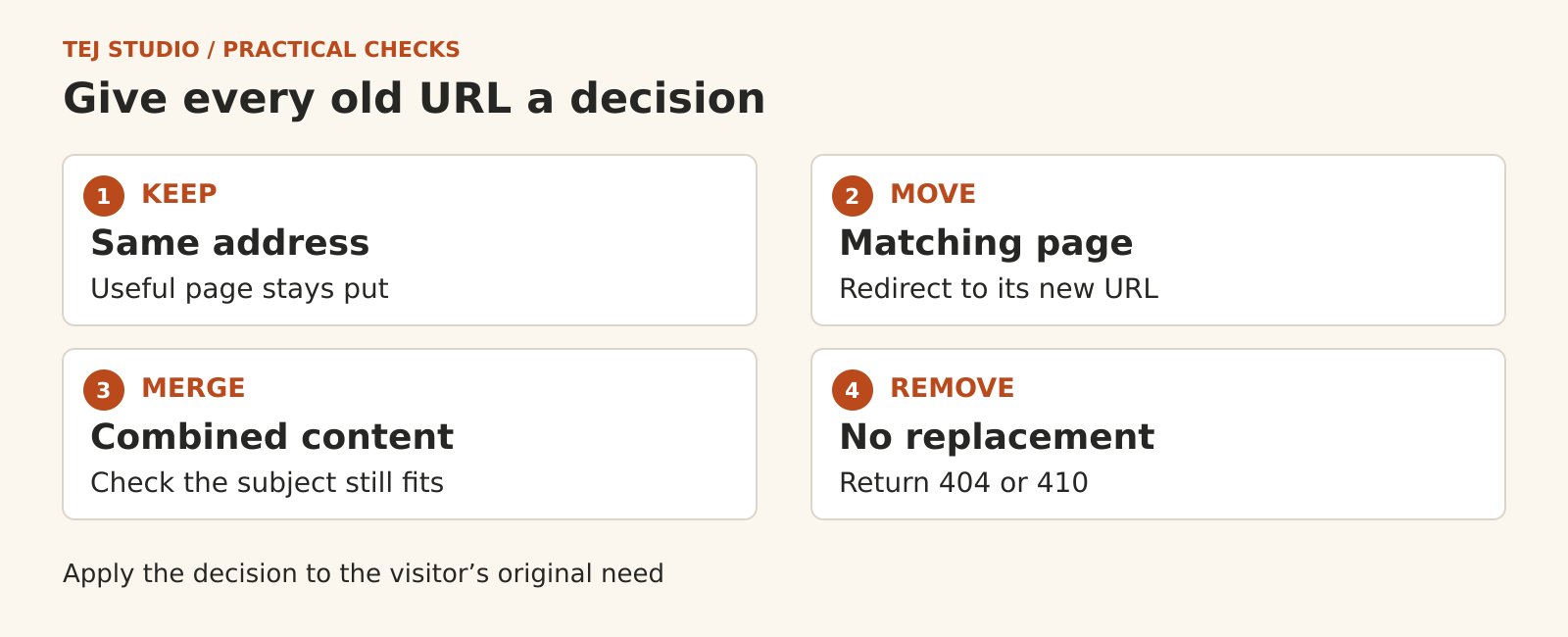
A page about commercial air-conditioning repairs should lead to a page that still answers that need. If several service pages are being combined, check that the combined page genuinely covers their subject matter. Approve those content decisions before the developer writes the rules.
Specify what each redirect must do
For a permanent move, ask for server-side 301 or 308 redirects wherever the platform supports them. Both indicate a permanent change. Temporary redirects, such as 302, are intended for temporary situations; ask the supplier to explain any exceptions.
Require old addresses to go directly to their final destination. A chain that passes through earlier versions adds delay and makes the setup harder to check. Include previous redirects in the review so the redesign does not add another hop.
Avoid a blanket rule sending every missing page to the homepage. An irrelevant destination can confuse visitors and may be treated as a soft 404 by Google. When content has been removed without a suitable replacement, return an actual 404 or 410 response.
A helpful missing-page design can still offer navigation or contact options. Ask the developer to verify its HTTP response; a page that merely displays “not found” can still incorrectly report success.
Test the old link through to the enquiry
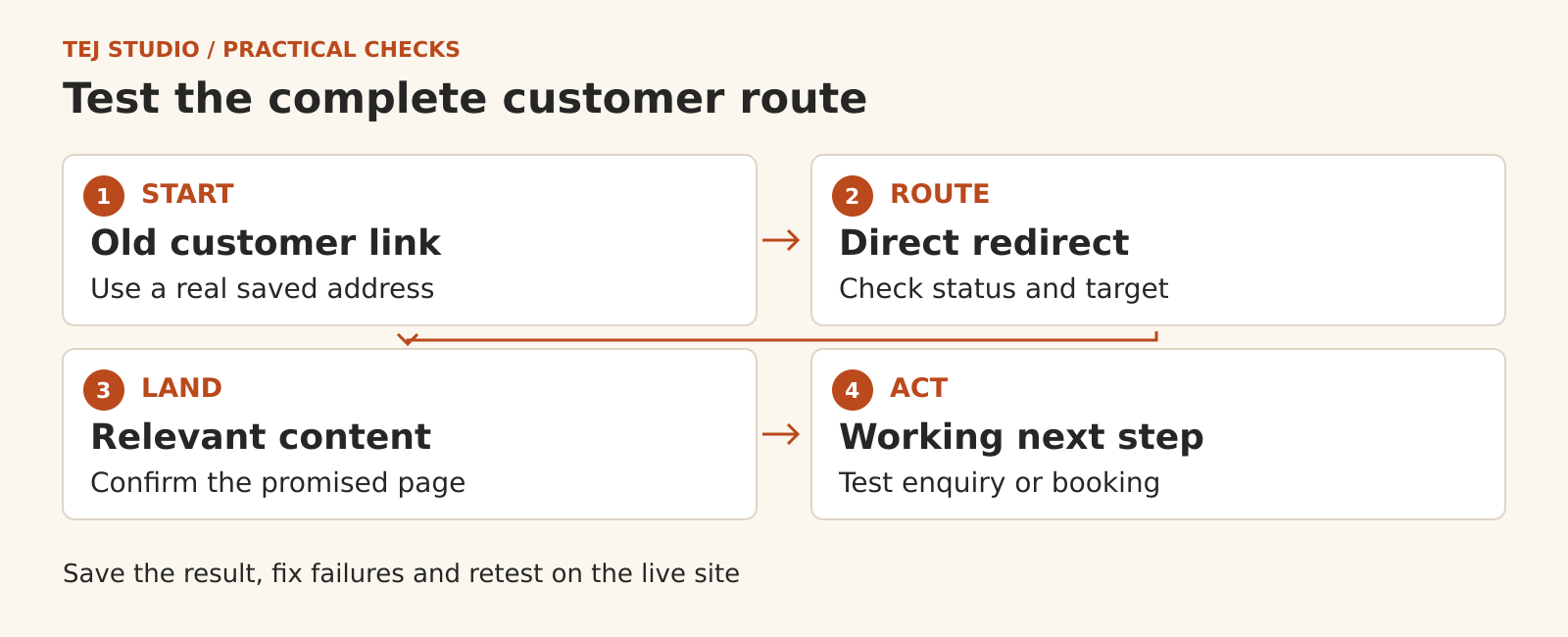
Make a redirect test report a launch requirement. Ask for automated checks across the agreed map, followed by manual checks of the pages most important to the business. Repeat the checks on the live site after deployment.
- The old URL returns the intended redirect status and destination.
- The destination loads successfully and contains the expected content.
- There are no redirect loops or unintended intermediate pages.
- The customer can complete the next step, such as an enquiry or booking.
Include the URL variants your site actually uses, such as trailing slashes or relevant query parameters. Test a saved customer link on a phone as well as a desktop. Record failures with the address tested, expected outcome, owner and retest result.
Align the new site’s search signals
Ask the team to update internal links to the final URLs. Canonical tags, which indicate a preferred page address, should agree with those destinations and the sitemap. Check that the new pages do not accidentally point back to old or staging addresses.
Require an updated sitemap containing the preferred live URLs and confirm its submission in Search Console. Submission helps discovery but does not guarantee indexing. Check that development-only noindex instructions and crawl blocks have been removed from pages intended for search.
Agree who owns the plan after launch
Keep the redirect map and test results with your handover documents. Record where the rules live, who can change them and whether they depend on a paid plugin or hosting arrangement. Ask what happens to those rules if you later change suppliers.
Plan to retain permanent redirects for at least a year and longer while useful old links remain in circulation. Agree who checks unexpected missing-page errors, search traffic and enquiry performance after launch, and how urgent problems are escalated.
Search visibility can fluctuate while changed URLs are processed. Ask for a monitoring and correction plan rather than a promise that rankings will remain unchanged. Have the quote state what testing and post-launch fixes are included, with any ongoing costs in AUD and GST treatment clear.
Planning a redesign? Tej Studio’s website redesign service is a starting point for the brief. Bring your current website address and key enquiry pages, and include URL mapping and redirect acceptance in the scope.
Put the thinking to work.
Discuss what these questions mean for your product or business.
website redesign service Start a conversation